


Why live music creates one of the most powerful spaces for understanding between generations—and how concerts help break down barriers between teenagers and adults.
More Than Just an Evening Out
Families today spend more time together than ever—and, paradoxically, less time truly connecting.
Parents are busy with work. Teenagers are immersed in school, hobbies, and social media. Conversations are often reduced to schedules, responsibilities, or quick exchanges over dinner. Finding experiences that genuinely engage both generations has become increasingly difficult.
Live music offers a rare exception.
Whether it’s a classical orchestra, a jazz ensemble, a film soundtrack performance, or a contemporary music festival, concerts create a shared emotional experience that doesn’t rely on age, occupation, or opinions. For a few hours, everyone listens, reacts, and feels together.
Music becomes a bridge where words sometimes fail.
Why Music Speaks Across Generations
Unlike many forms of entertainment, music doesn’t require everyone to have the same interests or life experiences.
A teenager may hear excitement.
A parent may hear nostalgia.
A grandparent may recall memories from decades ago.
Yet all three can be deeply moved by the same performance.
Music communicates emotion before it communicates meaning.
That’s why it has the unique ability to unite people who might otherwise struggle to understand one another.
Shared Experiences Build Stronger Relationships
Psychologists have long recognized that meaningful shared experiences strengthen emotional bonds.
A concert naturally provides many of these moments.
Families experience together:
- Anticipation before the performance
- The excitement of entering the venue
- Moments of silence
- Powerful climaxes
- Laughter
- Surprise
- Standing ovations
These shared memories become lasting reference points.
Months later, someone may simply say,
“Remember that incredible violin solo?”
Immediately, everyone returns to that moment together.
Leaving Everyday Roles Behind
At home, family members often occupy fixed roles.
Parents remind.
Children resist.
Teenagers seek independence.
At a concert, those roles temporarily disappear.
Everyone becomes simply a listener.
This subtle shift changes family dynamics.
Parents stop instructing.
Teenagers stop defending themselves.
Instead, both become participants in the same artistic experience.
Discovering Each Other’s Tastes
One of the greatest surprises of attending concerts together is realizing how much musical overlap exists.
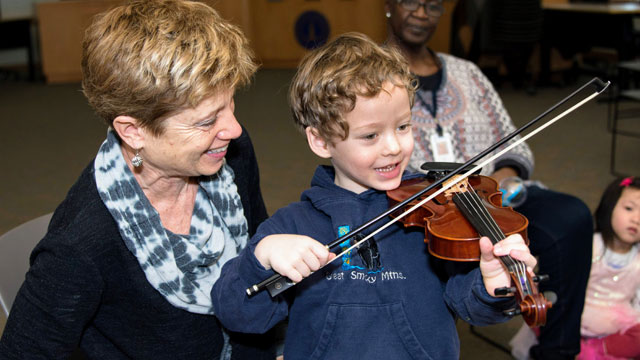
Parents may discover that their children appreciate orchestral film music.
Teenagers may unexpectedly enjoy jazz improvisation.
Children may become fascinated by live percussion.
Shared concerts encourage curiosity instead of assumptions.
Families often leave saying,
“I didn’t know you liked this kind of music.”
Conversations Become Easier
After a concert, discussions arise naturally.
Instead of asking,
“How was school?”
Families talk about:
- Favorite pieces
- Memorable performers
- Emotional moments
- Stage design
- Lighting
- Unexpected highlights
These conversations are relaxed because there are no right or wrong answers.
Everyone experienced the same event differently.
Listening to each other’s perspectives becomes part of the experience.
Music Encourages Empathy
Live performances reveal human emotion in its purest form.
Audiences witness:
- Joy
- Vulnerability
- Passion
- Determination
- Celebration
- Reflection
Experiencing these emotions together helps family members better understand one another’s feelings.
Empathy grows naturally through shared artistic experiences.
The Importance of Being Fully Present
Modern families often struggle with constant digital distractions.
Concert halls offer something increasingly rare:
Undivided attention.
Phones are silenced.
Notifications disappear.
For one or two hours, everyone shares the same moment.
This collective focus creates deeper memories than fragmented attention ever could.
Classical Music Isn’t Just for Adults
Many parents assume that orchestral concerts are too serious for younger audiences.
In reality, children often respond enthusiastically to:
- Film music
- Ballet
- Seasonal concerts
- Interactive family performances
- Animated visual presentations
- Famous symphonic works
The key is choosing age-appropriate programs.
Positive first experiences often inspire lifelong appreciation.
Teenagers Need Authentic Experiences
Teenagers constantly encounter digital entertainment.
Live music offers something impossible to replicate online.
They experience:
- Real performers
- Genuine emotions
- Human imperfections
- Audience reactions
- Shared excitement
Authenticity is increasingly valuable in a digital world.
Music Creates Family Traditions
Some families establish annual concert traditions.
Examples include:
- Holiday performances
- Summer festivals
- Outdoor symphony concerts
- Jazz weekends
- Opera evenings
- Community music events
These traditions become part of family identity.
Years later, they are remembered as milestones rather than ordinary outings.
Practical Tips for Parents
If you want concerts to become enjoyable family experiences:
- Let children help choose performances.
- Start with accessible programs.
- Avoid forcing detailed discussions afterward.
- Focus on enjoyment rather than education.
- Attend regularly instead of treating concerts as rare occasions.
Positive experiences naturally build curiosity.
Beyond the Final Applause
The greatest value of attending concerts together isn’t musical knowledge.
It’s connection.
Long after individual notes fade away, families remember:
- Walking to the venue
- Waiting for the lights to dim
- Smiling during favorite moments
- Sharing applause
- Talking on the way home
These experiences quietly strengthen relationships.
Final Thoughts
In an age where families often communicate through screens rather than shared experiences, live music offers something remarkably simple yet deeply meaningful: the opportunity to be fully present together.
Concerts remove everyday distractions, replace routine conversations with genuine emotional reactions, and create memories that continue long after the performance ends. They remind parents and children that despite differences in age, interests, or perspectives, they can still laugh, wonder, reflect, and be inspired by the same music.
More than entertainment, shared concerts become bridges between generations. They encourage curiosity instead of judgment, conversation instead of conflict, and understanding instead of assumptions. In a world that often emphasizes what separates us, music continues to reveal what we have in common.
-
Previous Post
How the Venue Changes the Way We Experience Music
Related Posts
Live Music vs. Algorithms: Why the Digital Age Will Never Replace the Concert Experience
Why people continue buying concert tickets despite having millions of songs available instantly on their…
The Power of Musical Communities: Why People Search for “Their People” at Concerts
Exploring the psychology behind music communities and how shared emotional experiences transform strangers into lifelong…