


An inside look at the months of preparation hidden behind every successful music festival—from artist riders and stage construction to logistics, rehearsals, and the teamwork that makes it all possible.
More Than Just a Concert
When audiences arrive at a music festival, everything seems effortless. The stage is ready, the lights are synchronized, musicians perform flawlessly, food vendors are operating, and thousands of people enjoy an unforgettable experience.
What most visitors never see is that a major festival is the result of months—sometimes more than a year—of planning involving hundreds of professionals working behind the scenes.
Every successful performance depends on countless decisions made long before the first note is played.
From negotiating with artists and coordinating transportation to testing sound systems and preparing emergency plans, every detail matters.
Let’s explore what really happens behind the scenes before a large-scale music event opens its gates.
It All Begins with an Idea
Every festival starts with a vision.
Organizers first define the event’s identity by answering important questions:
- What type of music will be featured?
- Who is the target audience?
- How many visitors are expected?
- Will the event last one day or several?
- Is it indoor or outdoor?
- What atmosphere should guests experience?
A clear concept guides every decision that follows, from booking performers to designing promotional materials.
Without a strong vision, even a large budget cannot create a memorable event.
Booking the Artists
One of the earliest and most important tasks is confirming performers.
Festival organizers often begin contacting artists many months in advance.
Negotiations involve:
- Performance dates
- Fees
- Travel arrangements
- Accommodation
- Performance duration
- Technical requirements
Popular artists may have international tours planned years ahead, making scheduling a complex puzzle.
Understanding the Artist Rider
Many people have heard of an artist’s rider but don’t fully understand its purpose.
A rider is a document outlining everything required for a successful performance.
There are usually two types.
Technical Rider
This includes:
- Stage dimensions
- Microphones
- Speakers
- Lighting equipment
- Power requirements
- Instrument setup
- Monitor systems
Hospitality Rider
This may specify:
- Dressing rooms
- Meals
- Drinks
- Towels
- Transportation
- Security
- Internet access
While some riders have gained a reputation for unusual requests, most contain practical requirements that help performers do their best work.
Choosing the Perfect Venue
The venue influences nearly every aspect of the festival.
Organizers consider:
- Capacity
- Accessibility
- Parking
- Public transportation
- Power supply
- Weather conditions
- Emergency exits
- Acoustic characteristics
Outdoor festivals require additional planning for wind, rain, temperature changes, and ground stability.
Building the Stage
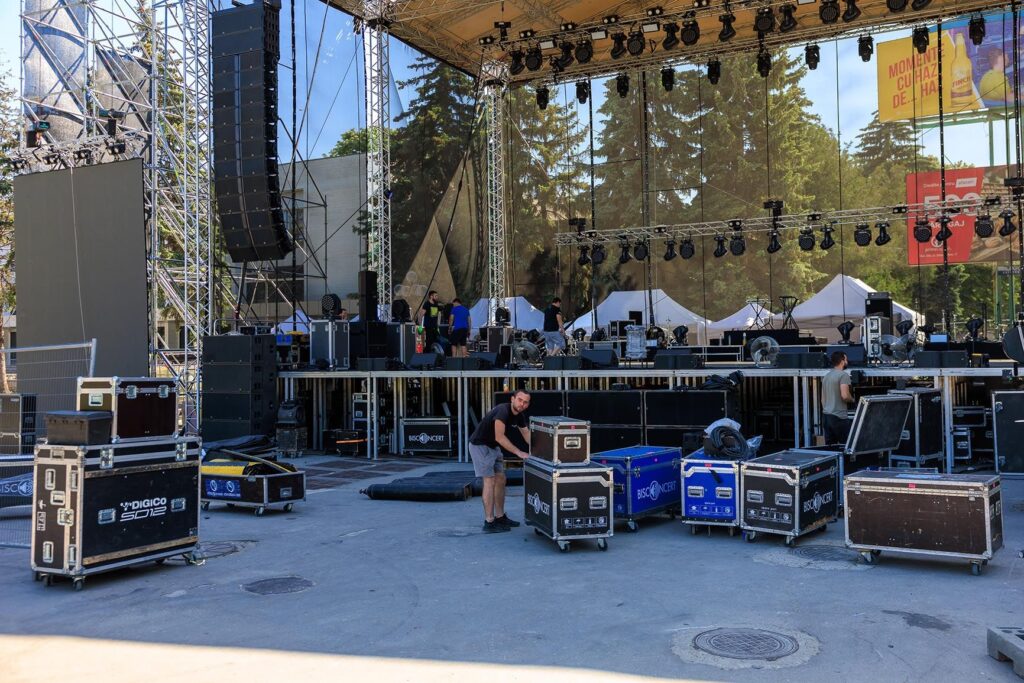
Long before audiences arrive, construction crews begin assembling the stage.
This process involves:
- Structural engineering
- Rigging
- Lighting trusses
- LED screens
- Sound systems
- Safety inspections
Large festival stages may require several days—or even weeks—to complete.
Everything must meet strict safety standards before performers can begin rehearsals.
Sound and Lighting Setup
Professional audio and lighting teams transform an empty stage into a live performance environment.
Engineers install:
- Speaker arrays
- Mixing consoles
- Stage monitors
- Wireless microphones
- Spotlights
- Laser systems
- Video displays
Every cable is carefully labeled and tested.
Even a single faulty connection can disrupt an entire performance.
Logistics: Moving Hundreds of People
Large festivals resemble small cities.
Organizers coordinate:
- Artists
- Crew members
- Volunteers
- Vendors
- Security teams
- Medical personnel
- Cleaning staff
- Equipment suppliers
Transportation schedules must be precise.
A delayed truck carrying stage equipment or instruments can affect the entire production timeline.
Rehearsals Never Really Stop
Many people imagine rehearsals as musicians simply playing through their repertoire.
In reality, rehearsals include:
- Sound checks
- Lighting cues
- Video synchronization
- Stage entrances
- Microphone testing
- Camera rehearsals
- Emergency procedures
Technical teams often work around the clock during the final days before opening.
Twenty-four-hour schedules are common for major festivals.
Safety Comes First
Modern festivals invest heavily in safety planning.
Preparation includes:
- Crowd management
- Emergency medical stations
- Fire safety
- Weather monitoring
- Security checkpoints
- Evacuation plans
The goal is to create an enjoyable environment while being prepared for unexpected situations.
The Role of Volunteers
Many festivals rely on volunteers who assist with:
- Guest information
- Ticket scanning
- Audience guidance
- Backstage support
- Merchandise sales
- Artist hospitality
Their enthusiasm often becomes an important part of the visitor experience.
What Happens on Festival Day?
Long before visitors enter the venue, the production team is already working.
Typical festival-day activities include:
- Final equipment inspections
- Artist arrivals
- Last-minute rehearsals
- Catering preparation
- Security briefings
- Weather updates
- Technical testing
Every department follows a carefully coordinated schedule.
The Invisible Heroes
Audiences usually recognize performers.
Few notice the hundreds of professionals working behind the scenes.
These include:
- Stage managers
- Lighting designers
- Audio engineers
- Camera operators
- Electricians
- Logistics coordinators
- Medical teams
- Clean-up crews
- Production assistants
Without them, the show simply could not happen.
When Problems Arise
Even perfectly planned festivals encounter challenges.
Examples include:
- Equipment failures
- Flight delays
- Heavy rain
- Power outages
- Last-minute schedule changes
- Technical malfunctions
Experienced production teams prepare backup solutions for nearly every scenario.
Flexibility is just as important as planning.
Why Preparation Matters
The audience remembers the music.
Organizers remember the preparation.
Every seamless concert represents thousands of decisions, hundreds of professionals, and countless hours of coordination.
When everything appears effortless, it usually means the planning was exceptional.
Final Thoughts
A large-scale music festival is far more than a series of performances—it is a remarkable collaboration between artists, technicians, engineers, designers, logistics specialists, security teams, volunteers, and countless other professionals working toward a shared goal.
While audiences experience only a few unforgettable hours of music, the production itself is built through months of planning, problem-solving, and teamwork. Every stage light, every perfectly timed cue, every safe entrance, and every flawless sound check reflects an enormous amount of invisible effort.
The next time you attend a festival, take a moment to appreciate not only the musicians on stage but also the dedicated people behind the scenes. Their expertise transforms an empty venue into a world where thousands of strangers can gather, celebrate, and share the unique experience that only live music can create.
Related Posts
How the Venue Changes the Way We Experience Music
Why architecture, acoustics, and atmosphere shape not only what we hear, but also how we…
Five Minutes Before the Orchestra Takes the Stage: What Happens Behind the Curtain?
Discover the hidden world backstage just moments before a live performance—from final instrument tuning and…